Your AI Agent Has Amnesia, and It’s Not a Tech Problem
Teaching machines to remember the way humans do
There’s a moment every AI agent user hits, usually about three hours into a productive session, right as you’re about to solve a problem, where you reference something you discussed earlier and your agent stares back at you like a golden retriever hearing a new word. Blank. Gone. The context you spent an hour building? Evaporated.
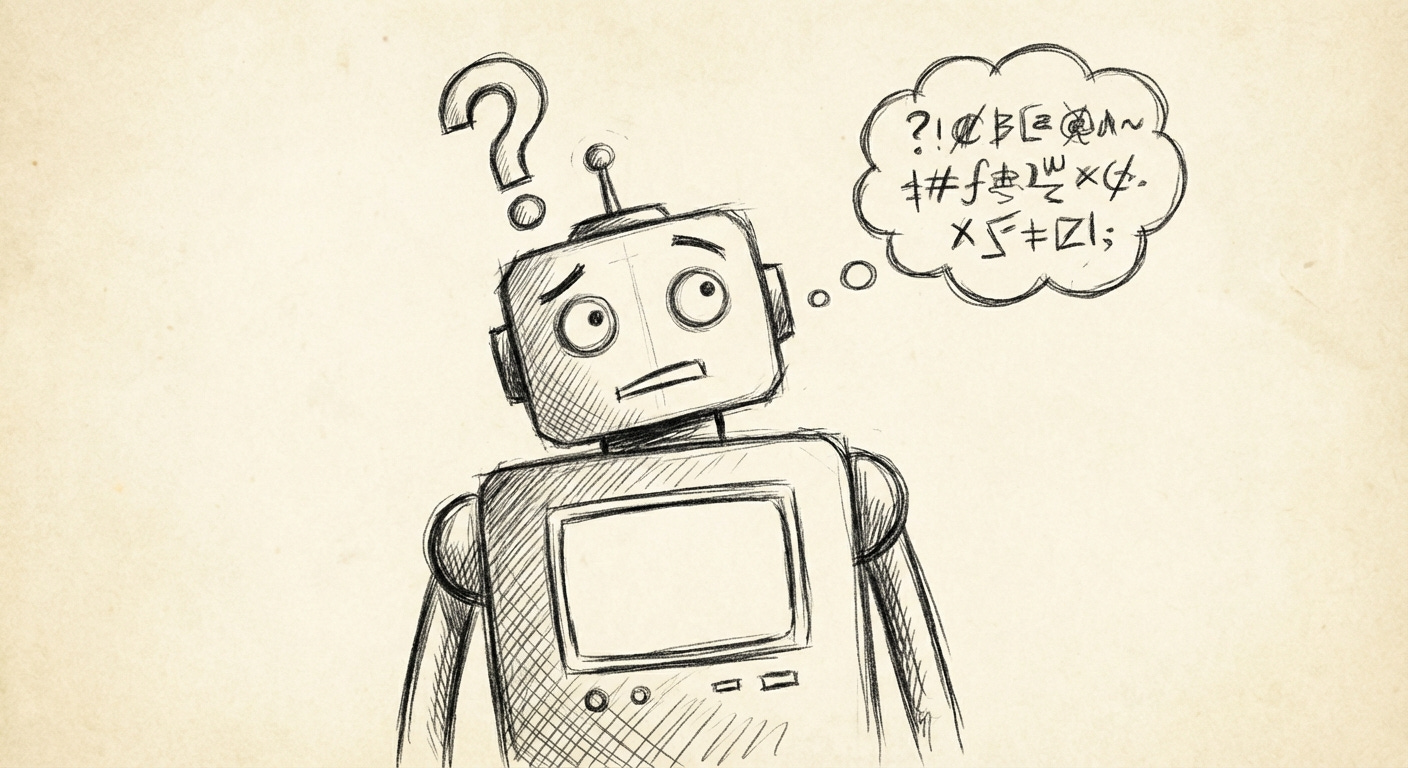
If you’ve used any of the persistent AI assistants you’ve felt this. The agent starts strong, builds context, gets genuinely useful, and then somewhere in the conversation, something resets. Maybe it’s a context window overflow. Maybe it’s compaction. Maybe it’s just a new session. Whatever the trigger, the result is the same, you’re starting at the response of a stranger who still has access to your files but no memory of why they matter.
When I went to try to fix this1, what I found surprised me. (No, not the missing Epstein files). The answer surprised me because it is not that the technology was hard, but because the solution had almost nothing to do with technology.
The Obvious Answer That Doesn’t Work
The instinct when your AI forgets things is to throw more tech at it. Bigger context windows. Better RAG pipelines. Vector databases. Fancier retrieval. The AI industry is spending billions on these approaches, and they help to a point.
But here’s what I realized after studying both the AI memory literature2 and, well, decades of actual memory research from cognitive psychology: the bottleneck isn’t storage or retrieval. It’s consolidation.
If you’ve taken a psych class, you know that human memory doesn’t work like a hard drive. We don’t just record experiences and play them back. Memory is an active process with distinct phases: encoding (taking in information), consolidation (organizing and strengthening it), and retrieval (getting it back when you need it). The magic happens in consolidation since that’s where the brain decides what matters, connects new information to existing knowledge, and transfers things from short-term to long-term storage. The decision on what stays vs goes is not always in our control.
Most of this consolidation happens during sleep3. Your brain literally replays the day’s events, strengthens important neural pathways, prunes irrelevant ones, and builds connections between new experiences and your existing mental model of the world.
AI agents have nothing like this. They have context windows (short-term memory) and maybe some files they can read (long-term storage). But there’s no consolidation step. No process that takes the raw experience of a conversation and distills it into durable, organized knowledge. The information goes in, sits in the context window, and then gets compressed or deleted when the window fills up.
That compression step (“compaction”) is supposed to summarize what came before. Think of it as the AI equivalent of your brain deciding what to remember from today. Except imagine if your brain’s consolidation process sometimes just failed. You wake up one morning and the previous day is simply gone. Not fuzzy. Gone. Its Memento4 but for your bot
That’s what kept happening to my agent mid-conversation. The compaction fired, the summary came back as “Summary unavailable due to context limits,” and suddenly I was talking to someone who didn’t know what we’d been working on for the past two hours.
The Fix Isn’t What You Think
Here’s where the psychology background becomes useful. If you look at what actually makes human memory reliable, it’s not the hardware, it’s the habits. People with exceptional memories don’t have bigger brains. They have better encoding strategies, more deliberate consolidation practices, and stronger retrieval cues.
The memory palace technique5 doesn’t give you more storage capacity. It gives you a discipline for organizing information so your existing memory system works better. Spaced repetition doesn’t expand your brain. It optimizes the consolidation process you already have.
So instead of building fancier retrieval systems, I set out to build the AI equivalent of good memory habits. Three layers:
Layer 1: Automatic Fact Extraction
After every significant conversation, a background process reads through what happened and extracts structured facts, which include decisions made, preferences expressed, commitments, things learned. It’s like journaling, but automatic. The AI equivalent of writing in your diary before bed6.
In cognitive psychology, this maps to elaborative encoding. This is the process of connecting new information to what you already know by actively thinking about it. The extraction step forces the system to process raw conversation into meaningful, categorized knowledge rather than just storing a transcript.
Layer 2: Knowledge Linking
The extracted facts get connected to each other. Related facts link together. Contradictions get flagged, if I said I like the snow last week and then after getting 30” of snow I say that I now hate it, the system notices. Over time, this builds a knowledge graph that mirrors what psychologists call semantic memory, which is your general knowledge about the world, organized by meaning rather than by when you learned it.
This is directly inspired by the Zettelkasten method and the research on associative memory networks. Isolated facts are fragile. Connected facts are resilient. The same principle that makes the memory palace work, spatial association, applies here through semantic association.
Layer 3: Daily Briefing
Every morning, the system generates a context briefing from the knowledge graph. Active projects, recent decisions, things to remember, personality notes. It’s the AI equivalent of reviewing your notes before a meeting, but it is actually priming retrieval pathways so the information is accessible when needed.
Psychologists call this retrieval practice, and it’s one of the most robust findings in memory research. The act of recalling information strengthens the memory trace far more than simply re-reading it. By forcing the agent to start each session with a structured recall of what matters, we’re mimicking the same process.
The Part That Actually Mattered
All of that is useful. But the real breakthrough was embarrassingly simple.
The agent already had a memory search tool. It could already look things up in its notes. It could already read its daily files. The tools existed. The problem was behavioral, the agent simply wasn’t using them consistently.
When you asked it about something from a previous conversation, instead of searching its notes first, it would try to answer from whatever was in the current context window. If that context had been compacted or was from a different session you’re hit with the golden retriever-like blank stare. Not because the information was gone, but because the agent didn’t think to look for it.
The fix? A single line in the agent’s instructions: “ALWAYS run memory_search before answering questions about past work.”
That’s it. That’s the intervention that made the biggest difference. Not a new database. Not a fancier embedding model. A behavioral instruction that said “check your notes before you guess.”
If this sounds familiar, it should. It’s the same problem students have. The information is in the textbook. They studied it. It’s in there somewhere. But without the habit of active retrieval the knowledge might as well not exist.
Compaction: When the Brain Fails
Even with all of this, there’s still the compaction problem — the moment when the context window fills up and the system has to compress or discard older conversation to make room for new input.
We (as in myself and the bot) tuned this in three ways:
Earlier triggers: Instead of waiting until the context window is completely full (emergency compaction), we trigger it earlier when there’s still room for the summarizer to work properly. It’s the difference between packing a suitcase the night before versus cramming everything in at the airport.
Pre-compaction memory flush: Before compaction happens, the agent gets a silent prompt to write important context to its daily notes. Like a student who knows the exam is coming and makes sure their notes are complete first.
Active checkpointing: During long conversations, the agent periodically writes its current state to file — what we’re discussing, what’s been decided, what’s still open. This is identical to the psychological concept of elaborative rehearsal, and it serves the same purpose: converting fragile short-term traces into durable long-term records before they can be lost.
The parallel to sleep consolidation is almost exact. Human memory is most vulnerable in the period between encoding and consolidation. If you learn something and then don’t sleep, retention drops dramatically. If you learn something and then experience interference (new, similar information), the original memory can be overwritten.
AI context windows have the same vulnerability window. Information enters, sits in short-term context, and if compaction fires before it’s been consolidated to external storage, then you’re out of luck and it’s gone. The checkpointing habit closes that window.
What’s Next
This is a new area of work for me. I’m calling it “cognitive architecture for AI agents” because what we’re really doing is applying established principles from human cognition to artificial systems. Not as metaphor but as an engineering practice.
The memory pipeline I described is running in production on my personal agent. It works. It’s not perfect, mid-session compaction can still cause disruption, and the knowledge graph is rudimentary compared to what human semantic memory does. But the improvement from “forgets everything between sessions” to “wakes up knowing who it is and what it’s working on” is dramatic.
The next question — and this is where it gets interesting — is what other cognitive processes we can transplant. Attention management. Metacognition (the agent knowing what it knows and doesn’t know). Goal persistence across sessions. Sleep-like consolidation periods where the agent reviews and reorganizes its knowledge without user prompting.
If you’re building with AI agents, the takeaway is this: before you upgrade your vector database or expand your context window, ask whether your agent is actually using the memory it already has. You might be surprised how far good habits can take you.
I use Clawdbot moltbot OpenClaw, an open-source AI agent framework. The agent has access to files, tools, and messaging — it’s a full-time digital collaborator, not a chatbot. I can discuss my setup another time.
The academic landscape here is interesting. A-Mem, MemGPT/Letta, Zep/Graphiti, and Mem0 all take different approaches to agent memory. Most focus on retrieval (getting information back) rather than consolidation (organizing it for future use). The gap between AI memory research and human memory research is enormous.
Specifically during slow-wave sleep and REM sleep. The hippocampus replays recent experiences, and the neocortex integrates them into existing knowledge structures. Walker’s Why We Sleep explains this well.
The 2000 film by Christopher Nolan, it’s a good watch. https://www.imdb.com/title/tt0209144/
Also called the method of loci, the technique where you associate information with locations in a familiar physical space. Competitive memorizers use this to remember thousands of digits. It works because spatial memory and associative memory are deeply connected in the hippocampus.
Except diary entries are JSON Lines files with typed facts, confidence scores, and subject tags. Less romantic, but more searchable.


